Top 10 Climate & Sustainability Trends To Watch In 2026/27
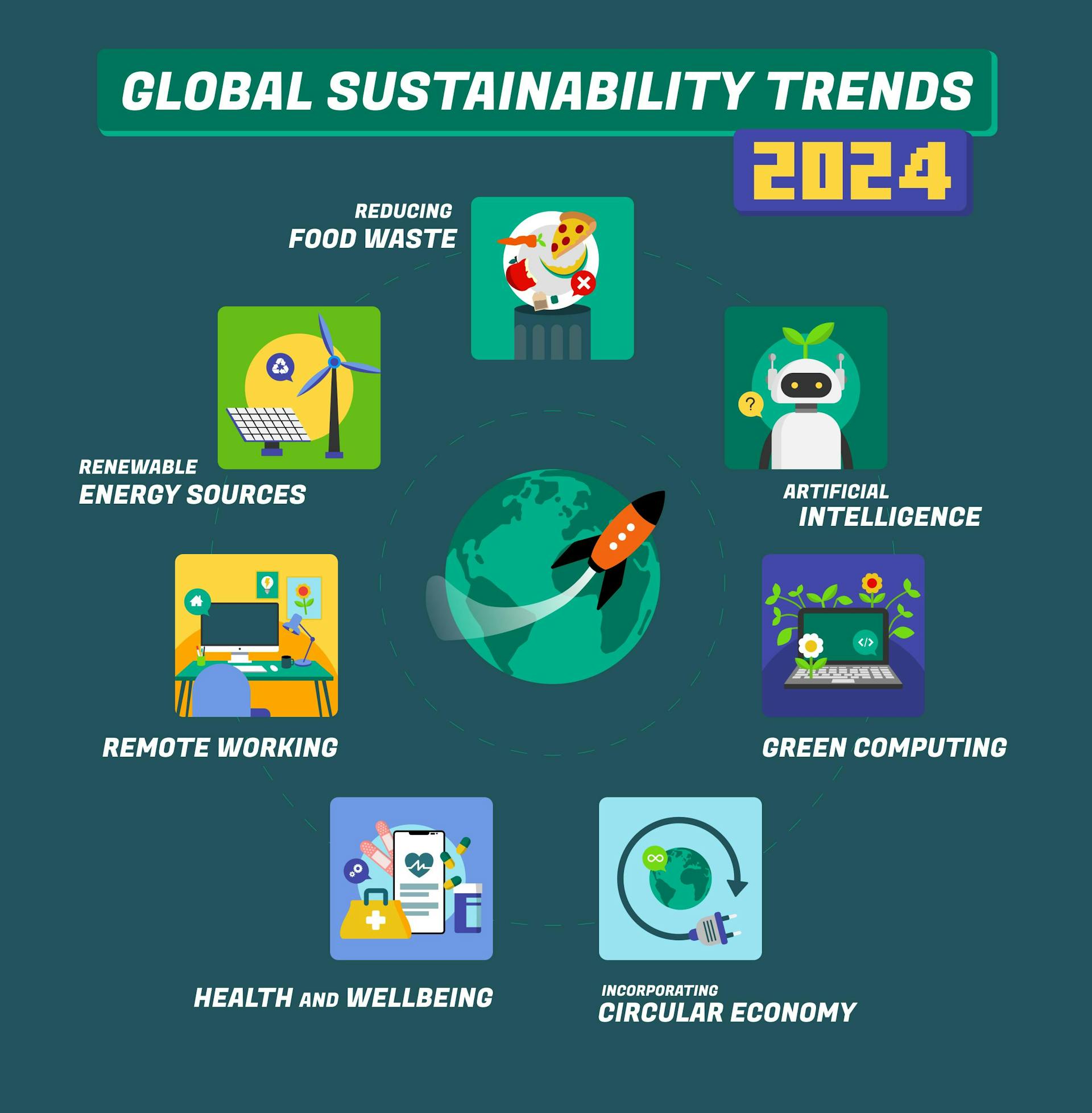
Sustainability and climate change have moved from the margins of political debates to the forefront of strategic planning for the economy, corporate strategy and the everyday decisions made. The science has been evident for many years, but the implementation of that knowledge into investment, policy, and behavior change is taking place at a rapid pace and scale that would have appeared unimaginative just when it was just a few years ago. However, progress is uneven and controversial in some quarters but not fast enough for most experts. However, the direction of travel is changing in ways that are becoming very difficult to dismiss. Here are ten global sustainability and climate trends that will be making headlines in 2026/27.
1. Energy Transition Accelerates Beyond Expectations Energy Transition Accelerates Beyond Expectations
Renewable energy installations continue to outpace even optimistic projections. New capacity additions for wind and solar set records each year. costs have slowed to levels that make clean energy the most affordable option in many markets, with no subsidy, and the investment in grid infrastructure and storage is scaling up to keep pace with. The transition to renewable energy is not without difficulty. The fossil fuel dependence remains an integral part of the world's economies and the pace of change significantly varies across regions. However, the economics of clean energy has become strong that the pace is basically self-sustaining in markets that are driving the transition.
2. Carbon Markets Have Grown and Are Experiencing More Scrutiny
Voluntary carbon markets have been in a tumultuous period, after high-profile studies revealed that most widely traded carbon credits resulted in less positive climate impact than was claimed. The response has been a pressure for higher standards more transparency, better standards, and more rigorous verification. The compliance carbon markets linked to regulatory frameworks are increasing in both scale and reach as well as the pressure on voluntary markets for genuine additionality and permanence is reshaping the notion of what a credible carbon offset would look like. The underlying notion is important but the requirements to make a market credible are growing.
3. Climate Adaptation Receives Long-Overdue Investment
For many years, the climate agenda had been focused mostly on mitigation, or reducing emissions so as to curb future warming. The fact that a significant amount of warming is established has moved adaptation, as well as building resilience to these impacts, which are unavoidable, into the discussion. The coastal flood defences, the heat-resilient urban design, drought resistant agriculture advanced warning and alert systems for the most extreme weather events are all receiving investment at a scale that reflects a more honest reckoning with what the coming decades will bring. Adaptation is no longer framed as giving up on mitigation but as an indispensable component to it.
4. Corporate Sustainability Reporting becomes mandatory
The days of voluntary self-reported, but largely unsubstantiated corporate sustainability obligations is drawing to a close in several jurisdictions. The mandatory requirements for sustainability disclosures covering climate, emissions risk exposure, as well as the impact of supply chains, are being introduced across major economies. This is causing companies to change from aspirational pledges to net zero to documented, auditable plan with specific interim targets. This transition is challenging on many businesses. However, the move towards standardised, comparable sustainability data is widely seen as an essential measure to hold corporate commitments to the climate.
5. The Food System Comes Under Greater Pressure to Change
Agriculture and land use accounts for a large portion of global greenhouse gas emissions as well as the food system in general, which includes food processing, production, packaging and waste, is an environmental footprint that is growing difficult to avoid. The way consumers consume food is changing slowly in the direction of plant-based alternatives becoming commonplace and food waste reduction getting more attention at the household and commercial levels. Additionally, the pressure on policy makers on agricultural emissions along with deforestation related to production of food, and the use of land for carbon sequestration is growing to transform the economics of how food is made and how.
6. Biodiversity In decline, there is an increase in the traction of Climate
For the better part of the past decade, biodiversity loss has had a place in the shadow from climate change public and policy-making despite being the most serious environmental crisis. It is now changing. Corporate reporting requirements, international frameworks requirements and the growing use of scientific communications about the links between ecosystem collapse and human wellbeing are boosting the visibility of biodiversity in a significant way. The idea of a nature-positive business with a focus on ways to enhance rather than diminish natural systems, is moving from niche-based commitment to a new standard, in the same way that net zero did a few years ago.
7. Green Hydrogen Moves From Promise To Pilot
The production of green hydrogen, made possible by renewable electricity to break down water, has been seen as a vital answer to decarbonising certain industries where direct electrification is difficult including shipping, heavy industry as well as long-haul aircraft. The problem has always been cost and size. As 2026/27 approaches, a greater the number of massive green hydrogen developments are moving from feasibility studies into production, costs are falling as electrolyser technology improves and governments are backing the industry with substantial investments. How green hydrogen can grow sufficiently quickly to meet the expectations of the public is an open question, but developments are moving forward.
8. Climate Litigation Expands As A Tool To Accountability
Legal action has emerged as one of the most effective mechanisms to compel corporations and governments in line with their climate-related commitments. Instances brought by citizens municipal authorities, and environmental groups have produced landmark rulings in various countries. Courts are increasingly willing and able to say that emitters, as well as major governments, are bound by law in connection with climate protection. The amount of climate-related legal cases has increased dramatically over the past five years, and is continuing to grow. For the boards of corporations and ministers, the risk to their legal rights associated with inadequate climate action is now a significant concern rather than just a theoretical risk.
9. The Circular Economy Moves Into The Mainstream
A linear system of taking to make, dispose of, and then take is being pushed to the limit by regulation, expectations of consumers, and the financial benefits of allowing products to remain in use for longer. Extended producer responsibility legislation is increasing, making producers accountable for the impacts of their end-of-life use on their products. Repair, reuse, and resale marketplaces are growing across various categories from clothing to electronics to furniture. Big companies are investing seriously in designing products and supply chains around circularity instead of viewing the issue as something to be considered a second priority. It is now not a niche idea, but a more prominent element of how sustainable company is defined.
10. The public's attitude to climate change is influenced by anxiety about it. and Behaviour
The psychological aspects of the climate crisis is getting a lot of attention. The chronic sense of worry about the environment's decline, is particularly prevalent among younger generations who have been raised and viewed the crisis as the central aspect of their lives. This is influencing consumer behaviour, career choices, mental well-being, and political engagement in ways that are now becoming apparent on a large scale. The ways in which societies help people combating climate anxiety while directing it into productive decisions rather than apathy and despair is becoming a major challenge for public health education, government leadership.
The scale of the challenge that climate change and ecological decline is massive, and there is many reasons to consider doubt that the present efforts can be considered sufficient. What the trends above reflect the reality of an increasingly global society that is dealing on the crisis with greater vigor at a higher level, with more concrete solutions, and faster than ever at previous time. The gap between what's happening and what is needed isn't as wide, but it is expanding in a number in areas, beginning diminish. To find additional info, browse the top For further insight, explore some of the leading riksfokus.se/ to learn more.

Top 10 Online Learning Changes Revolutionising How We Learn In 2026/27
The field of education is experiencing a change which is as significant as the previous ones, because of technology that is change not just how education can be delivered, but also what is to learn, what's worth learning and who can benefit from it. The online learning landscape in 2026/27 is situated at the intersection of cognitive computing, credential disruption changes in the demands of the labour market and a growing realization that the conventional model of a front-loaded educational system followed by a long period of static knowledge is no longer adequate for a world that changes as rapidly as it is now. Here are the ten online innovations in education that are set to revolutionize learning into 2026/27.
1. AI Instructors offer genuinely individual Learning
The idea of personalised education with instruction tailored to the personal learning pace, style of learning the gaps in knowledge and ambitions of each student has been around for years without ever being made accessible to the masses. AI tutoring technology is making it possible. Platforms that are able to adapt in real-time to how students respond, spot misconceptions before they become entrenched as well as adjust difficulty dynamically as well as provide explanations in numerous ways until the learner is creating measurable learning outcomes that are comparable to traditional instruction. The greatest benefit is in democratising access to the particularised attention that was traditionally available only to those with financial means for private tutoring.
2. Micro-Credentials and Skills-Based Certificates Gain Ground
The traditional degree is not disappearing, but its monopoly of credentialing is diminishing. Employers in a broader range of sectors are putting more importance on demonstrated competence as well as relevant certifications, rather than what kind of a degree. Micro-credentials are short focused courses that validate specific competencies, are being issued by universities, technology platforms or professional bodies. They are also issued by employers themselves. The challenge is building the infrastructure to ensure that these credentials are understandable as well as verifiable and reliable across different boundaries of an organization. Blockchain-based credential verification and growing employer acceptance of specific platforms certificates are both contributing to solving the issue.
3. Lifelong Education Becomes A Professional Demand
Change is speeding up in nearly every field is a sign that skills and knowledge acquired during the course of their education have less use than they have at any time in the past. Continuous upskilling and reskilling have become not a luxury for those with a career goal, but are essential for anyone looking to stay relevant in the job market that is being transformed by automation and AI faster than any previous technological shift. Online learning platforms provide an essential infrastructure for this constant professional development happening, and the market for adult education is growing drastically as employees, employers as well as governments invest in developing it.
4. Immersive Learning Environments using VR and Simulation
Simulation-based learning and virtual reality is moving beyond novelty into the actual effectiveness of teaching in certain domains. Medical students rehearse surgery procedures in virtual worlds prior to touching a patient. Engineering students remove and rebuild machineries in virtual environments. Language learners are able to practice speaking in the real world through simulations. The evidence base for immersive learning in high-stakes skill development is growing and the cost of the equipment used is decreasing. In the context of learning where the price of errors on the real environment is substantial, or where access to the real environment is limited, immersive simulation is proving its worth.
5. Social and Cohort-Based Training Reclaims Ground
In the beginning, online learning was individual, the learner was alone with their own content. The recognition that much of what makes education valuable is social, the discussion, debate, peer feedback, shared struggle, and relationship-building that happen between people learning together, has driven investment in cohort-based formats that recreate something of the classroom dynamic in an online context. Sessions that revolve around live interaction or peer collaboration projects, and shared progress are producing completion rates and outcomes for learning that are substantially better over self-paced single formats. The social aspect of learning is becoming more widely recognized as a benefit rather than a recurring issue.
6. The number of employers who provide education is growing significantly.
Infuriated by the gap between the results of traditional education and what they actually need the most large corporations are investing in the development of learning programs that provide the expertise they require. Internal academies, partnerships with universities and online platforms, sponsorship of learning pathways, and direct credit programmes designed in collaboration with industry are expanding. The distinction between education and employment is becoming less clear, and learning continues to be a part of every stage of life, instead of being isolated at the beginning. For students, education that is backed by employers often leads directly towards a job that traditional degrees cannot guarantee.
7. Learning Analytics allow earlier and more Effective Intervention
The data produced by online platforms for learning provides a granular picture of how people learn, what areas they struggle with their learning, what keeps them interested and the factors that lead to their dropping out which no traditional classroom could ever match. Learning analytics tools make the data useful and empowering, enabling educators and designers of platforms to pinpoint learners at risk of disengagement early enough to intervene, to determine which content and pedagogical approaches result in the best results for particular profiles of learners, and to keep improving the course's design that is based on data from multiple sources rather than intuition. If properly utilized, analytics help to make online learning more responsive and more efficient over time.
8. The way we learn languages is transformed by AI Conversation Partners
Language acquisition requires practicing in realistic settings that have been the most difficult aspect for self-directed learners to access. AI interaction partners that can respond in real-time, adjust according to the learners' level and correct mistakes constructively and create a vast array of scenarios for conversation are changing what is feasible for independent language learners. The performance of language practice with AI has improved to a point where it is possible to have a meaningful conversational skill developed without a human conversation partner, dramatically expanding the possibility of effective language learning for the hundreds of millions of people across the globe who wish to learn it.
9. Content Abundance Increases Value Direction and Curation
The amount of educational content that is available online is so huge that the issue of a lack of education has been fundamentally altered. The problem is not access to content. It's the capability to know what's worth learning, and in what sequence, and with what resources. The most sought-after online learning experiences to be found in 2026/27 are those that offer not only content but also context, curation, pathways, and a specialized instructions to help students navigate many options effectively. The educators and platforms that perform best are those that help people learn how to learn, not just those that can efficiently deliver information.
10. Education Technology Facing Growing Criticism Over Outcomes
The rapid expansion of the edtech industry has not been accompanied by constant, rigorous assessment of whether their products deliver the results they claim for learning. A growing amount of research along with regulatory scrutiny, as well as consumer scepticism is demanding the highest standards of evidence for learning platforms, credentialing programs, and AI teaching tools. The most trustworthy players on the market are responding by investing in independent result evaluation, clear reports of employment and completion information, and product design which prioritises real learning over engagement metrics. Pressure for accountability is a positive thing for the industry whose success is based on the ability to deliver what it claims to deliver.
Education has always served as reflective of society, and an instrument to transform it. The current trends in online learning 2026/27 mirror a world that is trying to figure out what individuals need to know, how they learn best and who should be able to get access to the tools to make learning more accessible. It is a direction that is generally encouraging towards more access in personalisation, greater flexibility, and a more open-minded assessment of what education is really about. The issue is making sure that the process benefits everyone instead of merely making existing benefits more effective to accumulate. For additional information, explore a few of the most trusted northreport.net/ and get reliable analysis.